Finding a pile of tiny pellets under a window frame usually leads to one question: does the whole house need to be tented? Not always. The right drywood termite treatment depends on how far the infestation has spread and whether every colony can be reached. Here’s how termite tenting, spot treatment, and other methods compare.
Why Drywood Termites Need a Different Approach
Drywood termites are social insects that live entirely inside dry wood. Subterranean termites nest in the soil and travel through mud tubes to reach your home, so they need regular contact with the ground. Drywood termites don’t. They get their moisture from the wood itself, so they can infest attics, window frames, fences, and furniture.
That difference shapes the treatment method. Soil treatments and bait stations work for subterranean termites because workers carry bait back to the colony underground. Drywood termites never touch the soil, so neither method reaches them. Dampwood termites need damp, decaying wood, and treating them starts with fixing the moisture problem. Drywood termite colonies are small, usually a few hundred to a few thousand termites, but one structure can hold several. Learn more about subterranean termites vs. drywood termites.
Signs of a Drywood Termite Infestation
- Small piles of six-sided pellets below tiny holes in wood
- Shed termite wings on window sills, especially after a termite swarm
- Damaged wood that sounds hollow when tapped
- Blistered paint or visible tunnels in exposed wood
A thorough inspection shows where termite activity is, how many colonies are present, and the extent of the damage. That determines which treatment methods will work.
Termite Tent Fumigation
Termite tenting, also called tent fumigation or whole-house fumigation, treats the entire structure at once. It’s the most thorough option for severe infestations or termites hidden in walls and attics.
How Termite Fumigation Works
A licensed fumigation company seals the house under tarps and releases sulfuryl fluoride gas, sold under brand names like Vikane. The gas moves through the air and into the wood, reaching termites throughout the building. Chloropicrin is added as a warning agent because sulfuryl fluoride has no odor. Fumigation leaves no residue on surfaces.
How Long to Stay Out After Termite Tenting
Termite fumigation usually takes two to three days. After the gas has had time to work, the tarps come off for aeration. Re-entry is allowed only after testing confirms gas levels in the house have dropped to 1 ppm or less. Plan for people, pets, and plants to be out the whole time.
How to Prepare Your Home
- Bag food, medicine, and pet food in special fumigation bags, or remove them.
- Remove houseplants and move outdoor plants away from the foundation.
- Turn off pilot lights and open interior doors, cabinets, and drawers.
- You don’t need to wash clothes or bedding afterward, since the gas leaves no residue.
Termite Tenting Cost
Termite tenting usually costs about $1 to $4 per square foot, according to Fixr’s national cost data. Price depends on the size of the building, the roof type, and local labor. Homes in Southern California and Florida see more drywood termite fumigation because these pests are so common there.
Spot Treatment for Termite Control
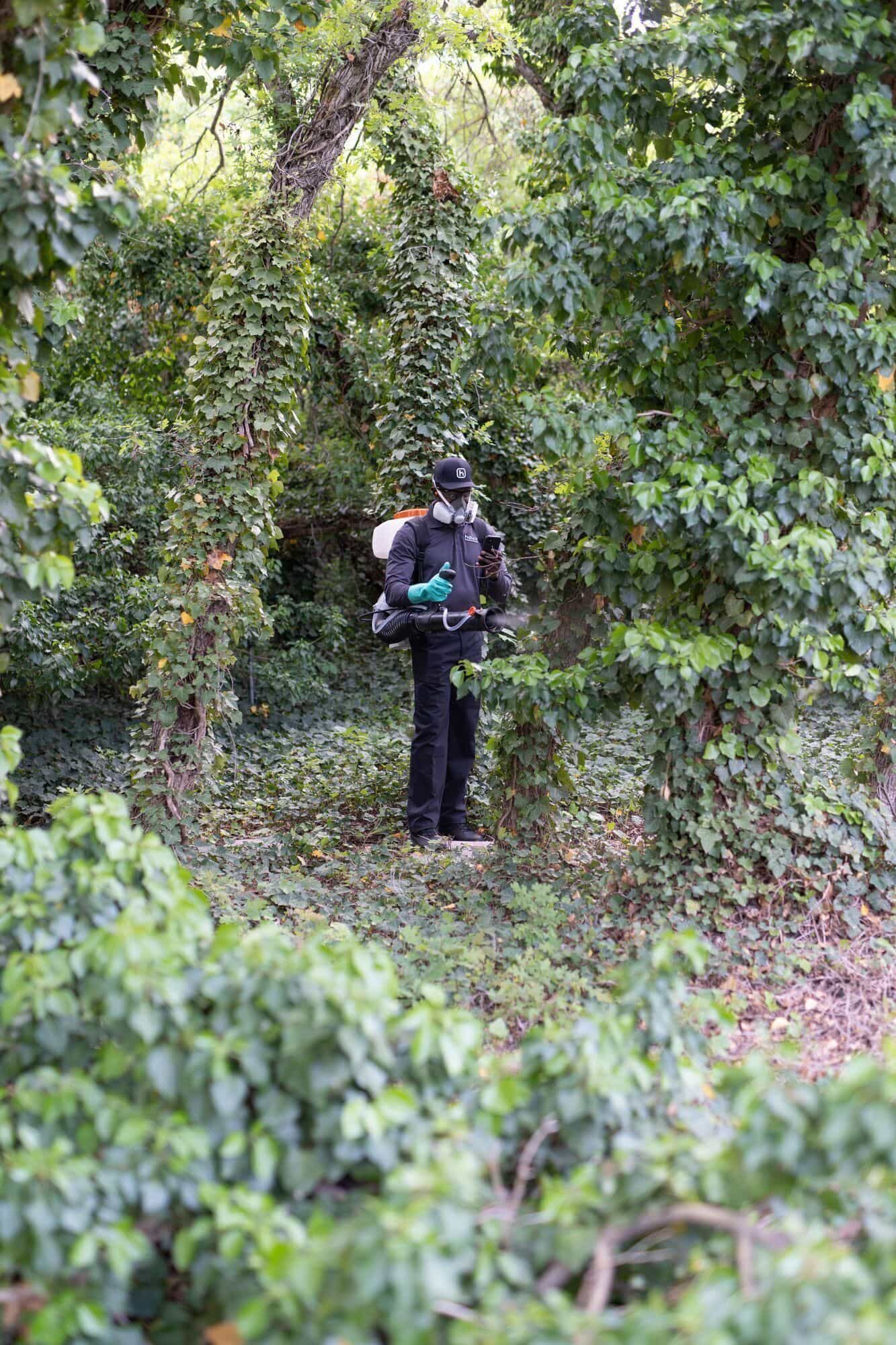
Spot treatment applies insecticide directly to infested wood. For an isolated infestation, drywood termite spot treatment can work without anyone leaving the home.
How Drywood Termite Spot Treatment Works
A technician drills small holes into the infested areas and injects a liquid or foam product into the termite galleries. The product spreads through the tunnels and kills the termites it contacts. Spot treatments work best when infestations are accessible and clearly mapped.
Orange Oil Termite Treatment
Orange oil termite treatment uses d-limonene, an extract from orange peels, as a targeted application. University of California research found fresh orange oil kills drywood termites well but loses much of its strength within about a month, so it offers little residual protection. Concentrated orange oil can also damage plants, so keep it off landscaping.
Other Methods: Heat, Microwave, and Wood Replacement
- Heat treatment raises wood temperatures to at least 120°F and holds them there for 33 minutes.
- Microwave and local heat target small infested sections.
- Wood replacement removes the damaged wood and the termites in it.
- Borates soak into unfinished wood for long-term prevention.
Tenting vs. Spot Treatment: Which Is Right for Your Home?
| Termite Tenting | Spot Treatment | |
|---|---|---|
| Best for | Widespread or hidden infestations | Localized, accessible colonies |
| Reaches | Entire structure | Treated areas only |
| Leave your home? | Yes, 2 to 3 days | No |
If termites are in one window frame or piece of furniture, spot treatment is often your best bet. If colonies are spread through walls and attics, whole-house fumigation is the more reliable option.
Do Termites Come Back After Treatment?
Fumigation kills the termites inside but doesn’t protect the house from new swarmers, and spot treatments only reach the colonies that were found. A new colony grows hidden inside the wood, so it can go unnoticed for years. Seal cracks, keep exposed wood painted or sealed, and schedule an annual termite inspection.
Protect Your Home From Drywood Termites With Hawx Pest Control
The right treatment depends on how many colonies you have and where they are, and that starts with a professional inspection. Hawx technicians map every active colony and treat localized infestations directly in the wood, so you can stay in your home. If the infestation is too widespread for localized treatment, your technician will tell you and explain your whole-structure options. Learn more about drywood termite control, schedule a termite inspection, or contact us today.
Drywood Termite FAQs
How long does termite treatment last?
Fumigation and heat have no residual effect, so protection ends once the process is done. Borates can protect treated wood for years. Some spot treatment products leave residual protection in the treated area, but they don’t protect untreated wood.
Do home remedies like WD-40, Lysol, or essential oils kill termites?
They may kill termites they touch, but they can’t reach a colony inside the wood. UC researchers note that home-use products are not effective for drywood termites.
Does homeowners insurance cover termites?
Usually not. Most policies treat termite damage as preventable, so pest control and repairs come out of pocket.
Can I treat drywood termites without tenting?
Yes. You don’t always need to fumigate if the infestation is localized and accessible. Spot treatments, heat, and wood replacement can all work when every colony has been located.
How much damage can drywood termites cause?
Drywood termites cause damage more slowly than subterranean termites because their colonies are smaller. Over several years, though, they can hollow out window frames, trim, furniture, and structural framing. A single home can hold several colonies at once, so the damage adds up. Catching activity early keeps repairs small and treatment simple.
How do termites survive in dry wood?
Drywood termites get almost all the moisture they need from the wood they eat and the air around it. That’s why they don’t need soil contact or mud tubes. It also means they can infest sound, dry wood anywhere in a home, from attic rafters to a wooden dresser.
Do bait stations work for drywood termites?
No. Bait stations like the Sentricon System work on subterranean termites, which forage through the soil and carry bait back to the colony. Drywood termites never leave the wood they live in, so they never find the bait. They need treatment applied directly to the infested wood, or whole-structure treatment when the infestation is widespread.
Sources
Fixr. (n.d.). How much does it cost to tent a house for termites?
Taravati, S. (n.d.). Does orange oil work for drywood termite management? UC Cooperative Extension, Riverside County.
University of California IPM. (n.d.). Drywood termites.
University of California Statewide IPM Program. (n.d.). Pest notes: Drywood termites (Publication 7440).