
A small pile of what looks like sand on a windowsill is easy to sweep up and forget. If those grains are termite droppings, though, they’re one of the earliest signs of a termite infestation, meaning termites are already eating the wood inside your home. Here’s what termite poop looks like, where termites leave it, and what to do when you find it.
What Are Termite Droppings?
Termite droppings, also called termite frass, are the waste termites produce after digesting wood and other cellulose-based materials. All termites produce waste, but only some leave frass you can actually see.
- Drywood termites live inside the wood they eat. To keep their tunnels clean, they push their fecal pellets out through tiny kick-out holes, where the droppings collect in small piles.
- Subterranean termites live in the soil and use their fecal matter to help build mud tubes. They don’t leave frass piles, so mud tubes are the sign to look for instead.
So when you find termite droppings indoors, you’re almost always dealing with drywood termites.
What Do Termite Droppings Look Like?
Termite droppings look like tiny grains of sand or coffee grounds. Up close, each of the termite pellets has a distinct shape:
- Size: About 1 mm long
- Shape: Oval, with six concave sides and rounded ends
- Color: Light beige, light brown, or dark brown, depending on the wood the termites are eating
- Texture: Hard pellets that are typically dry and don’t stick to surfaces
Drywood termite frass usually collects in small, cone-shaped piles directly below a kick-out hole. Because termites push out droppings in the same spot again and again, you may find the pile returning after you clean it up.
Termite Droppings Pictures: What to Look For
These termite droppings pictures show what to look for when you inspect your home. Once you know the pellet shape, it’s easy to spot frass.
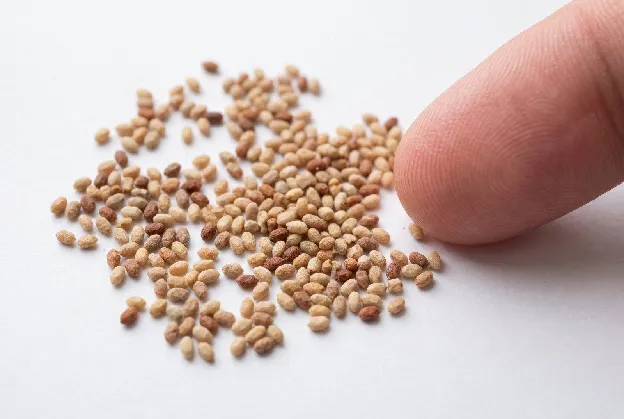
Drywood termite pellets are about 1 mm long, smaller than a sesame seed. Look for an oval shape with six sides and colors that vary from tan to reddish brown.
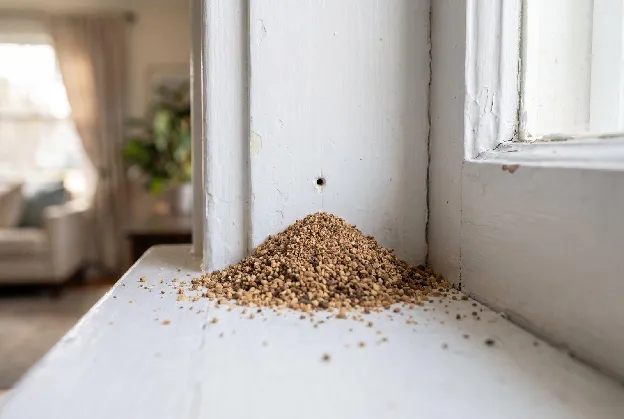
Frass collects in small, cone-shaped piles directly below a kick-out hole, often on window sills and door frames.
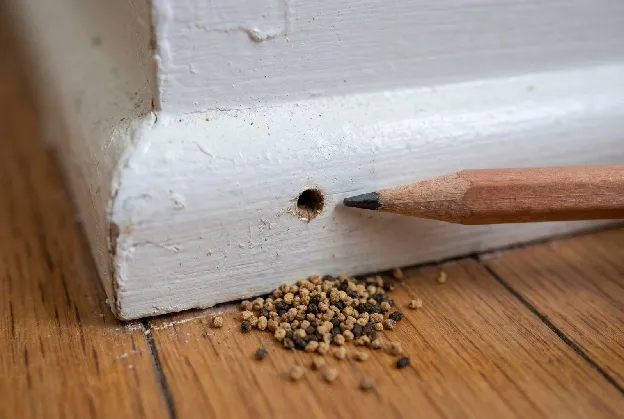
Kick-out holes are often smaller than a pencil tip and easy to miss. Check the wood directly above any pellets you find.
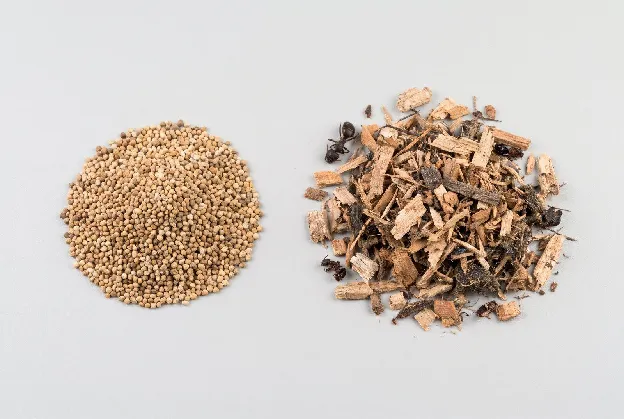
Termite pellets (left) are uniform and grain-like. Carpenter ant debris (right) is coarse, shredded wood, often mixed with ant parts.
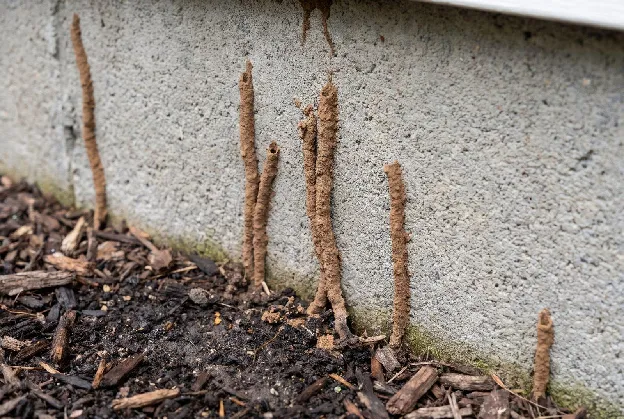
Subterranean termites don’t leave frass piles. Look for pencil-width mud tubes on foundations and crawl space walls instead.
Use a magnifying glass if you can. The six-sided pellet shape is the clearest way to tell termite frass from dust, dirt, or sawdust.
Where to Look for Drywood Termite Droppings
Drywood termites leave droppings wherever they live inside wooden structures, and each pile marks recent termite activity. Common spots include:
- Window sills and door frames
- Baseboards and wood trim
- Attic framing and rafters
- Wooden furniture, cabinets, and shelving
- Floors directly beneath exposed wood beams
Look for small holes in the wood just above any pile you find. These kick-out holes are often less than 2 mm wide and sometimes sealed with a thin plug.
Termite Droppings vs. Ant Droppings
Carpenter ants are the pest most often confused with termites, because both leave debris near damaged wood. Here’s how to identify which pest you have:
- Termite droppings are uniform, hard pellets that all look roughly the same size and shape.
- Carpenter ant debris is coarse, stringy wood shavings, similar to sawdust, often mixed with insect parts and soil. Carpenter ants tunnel through wood to build nests, but they don’t eat it, so what they leave behind is chewed wood, not waste.
If the pile looks like shredded wood particles, you’re likely dealing with carpenter ants. If it looks like tiny pellets, it’s likely termite frass.
Are Termite Droppings Harmful?
Termite droppings aren’t toxic to humans. Like other household dust, frass can irritate sensitive airways. Vacuum it up rather than sweeping, and wear gloves if you have sensitive skin.
The bigger concern is the termite problem behind them. Termite poop is a strong sign of an active infestation, and the termite damage is usually hidden inside the wood.
What to Do If You Find Termite Droppings
- Don’t ignore it. Fresh drywood termite droppings mean termites are actively feeding.
- Clean up the pile and check back. Vacuum the termite frass, then watch the same spot for a week. If new pellets appear, the colony is still active.
- Look for other signs. Check for kick-out holes, hollow-sounding wood, blistered paint, damaged wood, or discarded wings near windows.
- Schedule a professional termite inspection. Finding frass alone doesn’t show how far the infestation has spread. A single home can have several colonies, and swarmers can start new colonies elsewhere. A pest control professional can confirm the presence of termites and map the damage.
Treating a Drywood Termite Infestation
Store-bought sprays can’t reach termites living inside wood. Professional termite treatment for drywood termites usually starts with localized treatment injected directly into the infested wood. When colonies are widespread, whole-structure fumigation may be needed. Learn more about drywood termite control and how subterranean termites vs. drywood termites compare.
If you suspect termites, Hawx Pest Control can help. Our technicians will inspect your home, confirm the source of the droppings, and recommend a termite control plan. Schedule a termite inspection or contact us today.
Termite Droppings FAQs
Do subterranean termites make frass?
Subterranean termites produce waste, but they use it to build mud tubes and tunnels, so you won’t see frass piles like drywood termites leave behind.
What kind of bug droppings look like sand?
Drywood termite droppings are the most common culprit indoors. Look for tiny, uniform pellets with six sides.
How do you clean up termite droppings?
Vacuum up the termite frass, then wipe the area. Cleaning won’t affect the termites, so check the same spot over the next week for new termite activity.
Sources
- University of California IPM. (n.d.). Drywood termites. https://ipm.ucanr.edu/home-and-landscape/drywood-termites/
- University of California IPM. (n.d.). Pest notes: Drywood termites (Publication 7440). https://ipm.ucanr.edu/PMG/PESTNOTES/pn7440.html

