Most Painful Insect Stings – The Schmidt Pain Index

-Published on November 12, 2025

-Updated on December 3, 2025

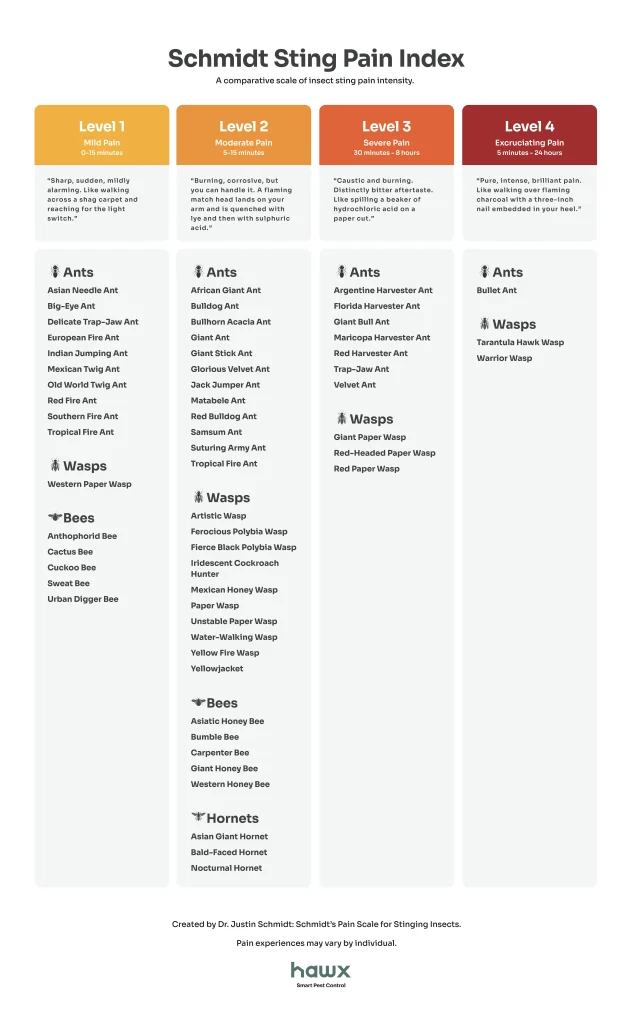
Did you know there’s an official pain scale for insect stings? It is called the Schmidt Pain Index for Stings. It was created by an entomologist named Justin Schmidt, who ventured to document—with poetic but painful descriptions—the varying degrees of pain he experienced from the different venomous stings of 83 species of bees, wasps, and ants that use stingers.  

Schmidt classified the sting pains on a scale of 1 to 4, with 4 being the most painful. If you get stung by an insect, you can use this index to qualify the pain or understand what kind of pain to expect. This will also help you to get the healing remedy or treatment you need.

We’ve included Schmidt’s lively, descriptive metaphors for describing the sensations for each level.

schmidt sting pain index infographic

Level 1: Mild Pain

Schmidt describes Level 1 pain as being very mild and temporary. He describes it as “sharp, sudden, mildly alarming. Like walking across a shag carpet and reaching for the light switch.” The duration of this mild pain is only about five minutes or less. 

Some Level 1 Insects include:

  • Fire ants: These small, reddish ants are aggressive and famous for their painful stings 
  • Twig ants: Native to Mexico, and more commonly found in tropical or subtropical regions of the Americas, these slender, long-legged ants live in trees and also have a painful sting 
  • Sweat bee, or other small bee with a small stinger: Any bee can sting you, but the smaller their size and thus their stinger, the better. Sweat bees are small, somewhat metallic-colored bees that are attracted to the salt in human sweat 
  • Small wasp with a small stinger: A small stinger will not pierce your skin as thoroughly, but it will still hurt 

Level 2: Moderate Pain

Level 2 is moderate pain. Or in Schmidt’s words, “Burning, corrosive, but you can handle it. A flaming match head lands on your arm and is quenched with lye and then with sulphuric acid.” It lasts between five and ten minutes. 

Some Level 2 Insects include:

  • Honey BeeThe honey bee’s main mission is to gather the nectar of flowers, but it will sting you if you get in its way
  • YellowjacketLooks a little like a honey bee, but it’s larger and not fuzzy.
  • Bald-faced hornets: These large black-and-white wasps have a white face, and unlike other bees and wasps, can sting you repeatedly

Level 3: Severe Pain

Level 3 pain not only feels worse, but it lasts longer. These stings can hurt poignantly for a full minute or can last for up to half an hour. Schmidt explains it as “Caustic and burning. Distinctly bitter aftertaste. Like spilling a beaker of hydrochloric acid on a paper cut.” If you get bit or stung and experience bad pain lasting this long, refer to Schmidt’s list of insects that qualify for Level 3 pain. 

Some Level 3 Insects include:

  • Red harvester ant: These reddish ants resemble fire ants, but they are a dull red or reddish-brown compared to a fire ant’s more red color, and their sting is significantly more painful 
  • Trap-jaw ant: Known for their powerful jaws that snap shut rapidly to catch prey or launch themselves away from danger, they will use these jaws to bite you
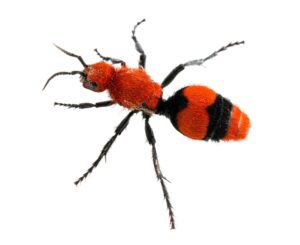
  • Velvet ant, AKA Cow antThese aren’t actually ants; they are technically fuzzy, wingless wasps known for their bright colors and extremely painful sting

Level 4: Excruciating Pain

Obviously, the highest level of pain feels awful. The kind of awful that Schmidt dramatically describes as g What’s worse, this serious discomfort can last up to two hours. The pain can be so bad that it can cause brief paralysis (because it is just too painful to move) or disorientation, but don’t worry, these stings are rarely medically dangerous.

Some Level 4 Insects include:

  • Bullet ant: These large tropical ants are known for their incredibly painful sting almost like being shot (hence the name).
  • Warrior waspAggressive wasps known for their loud buzzing when threatened (and of course, their subsequent sting)
  • Tarantula Hawk Wasp: A large, metallic-blue wasp known for hunting tarantulas, this frightening wasp can deliver one of the most painful stings in the world.

What to do if you get stung

Most pain will go away on its own, but for very bad bites and stings with lasting pain, there are some measures you can take to reduce swelling, inflammation, throbbing, and burning pain sensations.  

For Level 1 Mild Pain: This should go away quickly on its own. You don’t have to do anything but be surprised, wait for it to subside, and then move on.

For Level 2 Moderate Pain: Some ice should do the trick to reduce the inflammation. If there is any lasting sensation, some over-the-counter hydrocortisone cream or calamine lotion should help to calm it down.

For Level 3 Severe Pain: Wash off the punctured area to remove any venom residue. Then, hold ice or a cold pack on the sting spot for 20 minutes to help reduce the burning sensation or swelling. Continued application of over-the-counter creams like hydrocortisone cream or calamine lotion will also help with itching and residual pain.

For Level 4 Excruciating Pain: A cold pack and treatment creams may help, but you can also turn to pain relievers like ibuprofen or acetaminophen for relief.

We hope you never have to experience any of these painful stings! To keep your home and yard free of dangerous pests, call Hawx for preventive pest control.

Spread the love

Ready to protect your home or business from pests?

Schedule today and get up to $350 off a service plan tailored to your property. Receive a detailed report with pictures after each service is completed.

Get up to $350 Off

Share with your neighbors.

Facebook Twitter WhatsApp LinkedIn Pinterest Reddit Instagram Copy Link

Learn more about the pests in this article

Ready to protect your home or business from pests?

Schedule today and get a service plan tailored to your property. Receive a detailed report with pictures after each service is completed.